
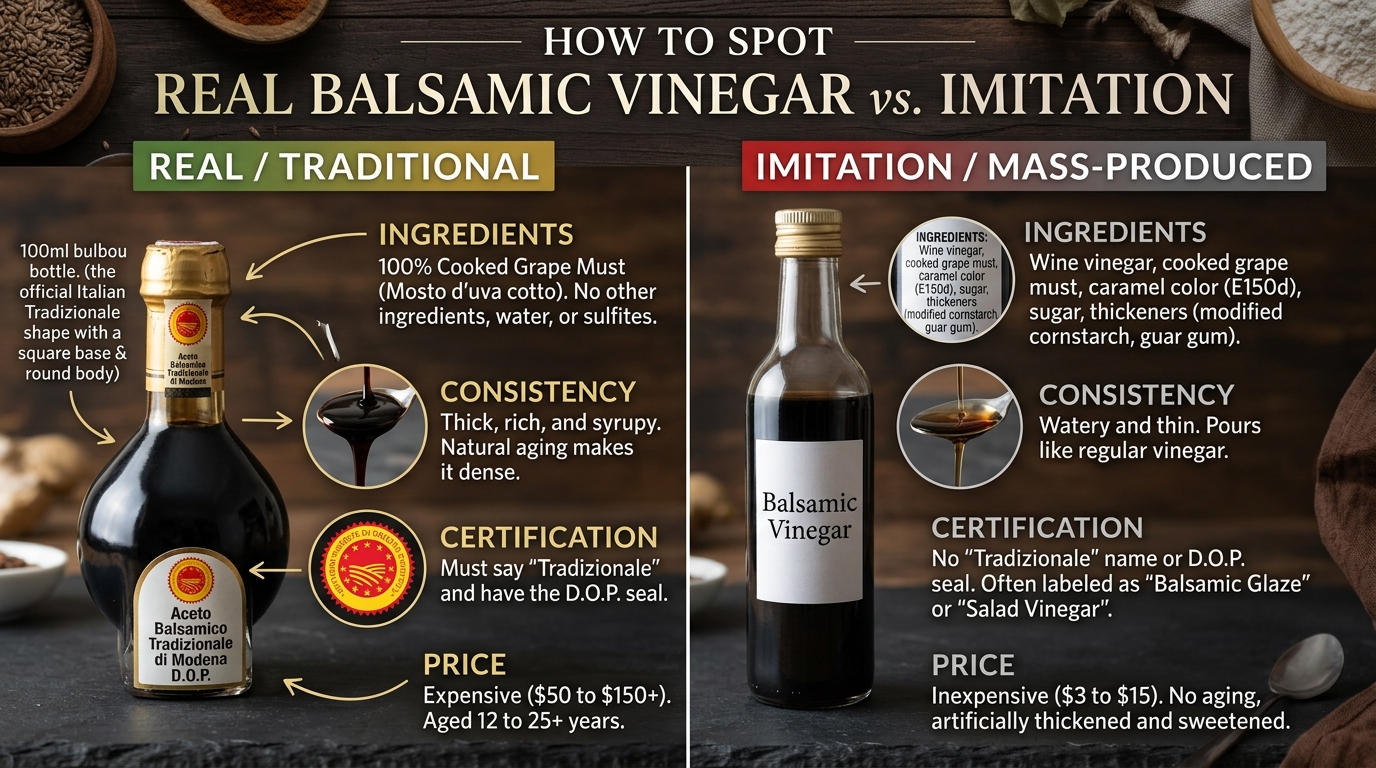
Ever found yourself browsing the shelves for that perfect bottle of balsamic vinegar, only to be overwhelmed by the array of options? Fear not, for we’re here to help you separate the real deal from the impostors. Real balsamic vinegar is a culinary gem, with its rich, complex flavors and centuries-old tradition. But in a world where imitation products abound, it’s important to know how to distinguish the authentic from the fake. Join us as we delve into the secrets of spotting real balsamic vinegar versus its impostors, so you can elevate your dishes with the true essence of this exquisite condiment.
Traditional Balsamic Vinegar vs. Imitation
Traditional Balsamic Vinegar: Traditional balsamic vinegar is a premium product that originates from specific regions in Italy, such as Modena and Reggio Emilia. It is made from grape must that is aged for a minimum of 12 years, resulting in a complex, sweet, and syrupy vinegar. The aging process takes place in wooden barrels, which impart unique flavors to the vinegar.
Imitation Balsamic Vinegar: Imitation balsamic vinegar, on the other hand, is mass-produced and lacks the same depth of flavor and complexity as traditional balsamic vinegar. It is often made with a combination of vinegar, coloring, and sweeteners to mimic the taste of authentic balsamic vinegar. Imitation balsamic vinegar is typically more affordable and widely available in supermarkets.
Labeling and Certification
Labeling and certification play a crucial role in ensuring the authenticity and quality of balsamic vinegar. True traditional balsamic vinegar from Modena or Reggio Emilia in Italy is labeled as either “Aceto Balsamico Tradizionale di Modena” or “Aceto Balsamico Tradizionale di Reggio Emilia.” These labels indicate that the vinegar has been produced following strict traditional methods and aged for a minimum of 12 years.
Additionally, the Consortiums in Modena and Reggio Emilia oversee the production and certification of traditional balsamic vinegar, ensuring that it meets specific standards. Look for the DOP (Denominazione di Origine Protetta) or IGP (Indicazione Geografica Protetta) labels on the bottle, which certify the vinegar’s origin and authenticity. These certifications help consumers make informed decisions when purchasing balsamic vinegar and guarantee a genuine and high-quality product.
Taste Test
Conducting a taste test is one of the best ways to distinguish between authentic balsamic vinegar and imitation products. Start by pouring a small amount of each vinegar into separate tasting cups. Take note of the color, consistency, and aroma of each vinegar. Authentic balsamic vinegar is typically dark in color, thick in consistency, and has a complex, sweet aroma with hints of fruits and wood.
When tasting the vinegars, pay attention to the flavor profile. Authentic balsamic vinegar should have a well-balanced taste with a harmonious blend of sweetness and acidity. It may also exhibit a long finish with lingering flavors. In contrast, imitation vinegars may taste overly acidic, artificial, or lack the depth and complexity of authentic balsamic vinegar. By conducting a taste test, you can train your palate to recognize the characteristics of high-quality balsamic vinegar.
Price Comparison
When considering which balsamic vinegar to purchase, price is often a key factor for many consumers. Authentic traditional balsamic vinegar, aged for many years and made with specific traditional methods, tends to be significantly more expensive than imitation or commercially-produced varieties.
While the price of traditional balsamic vinegar may seem high, it is important to understand that the cost reflects the time, craftsmanship, and quality ingredients that go into its production. On the other hand, imitation balsamic vinegars are usually mass-produced using cheaper ingredients and methods, resulting in a lower price point.
Tips for Buying Authentic Balsamic Vinegar
When looking to purchase authentic balsamic vinegar, there are several key tips to keep in mind. Firstly, check the label for specific indicators such as “Aceto Balsamico Tradizionale di Modena” or “Aceto Balsamico Tradizionale di Reggio Emilia.” These labels signify that the balsamic vinegar has met strict production guidelines and is of high quality.
Additionally, authentic balsamic vinegar is typically aged for a significant amount of time, ranging from a minimum of 12 years for traditional balsamic vinegar to over 25 years for extra-aged varieties. Look for terms like “aged,” “Vecchio,” or “Affinato” on the label to ensure you are getting a well-aged product. Lastly, be wary of unusually low prices, as authentic balsamic vinegar requires time and expertise to produce, making it a higher-priced commodity. By following these tips, you can be confident in selecting genuine and flavorful balsamic vinegar for your culinary creations.
Balsamic vinegar is a versatile and flavorful condiment that can enhance a wide variety of dishes. Through this exploration, it becomes evident that the differences between traditional balsamic vinegar and imitation versions are significant. Traditional balsamic vinegar, with its complex and rich flavors developed through a lengthy aging process, offers a unique taste experience that cannot be replicated by imitation products.
When shopping for balsamic vinegar, it is essential to pay attention to labeling and certification to ensure you are purchasing an authentic product. While traditional balsamic vinegar may come at a higher price point, the depth of flavor and quality it provides make it a worthwhile investment for culinary enthusiasts looking to elevate their dishes. By following tips for buying authentic balsamic vinegar and conducting taste tests, consumers can make informed choices and savor the true essence of this exceptional condiment.