
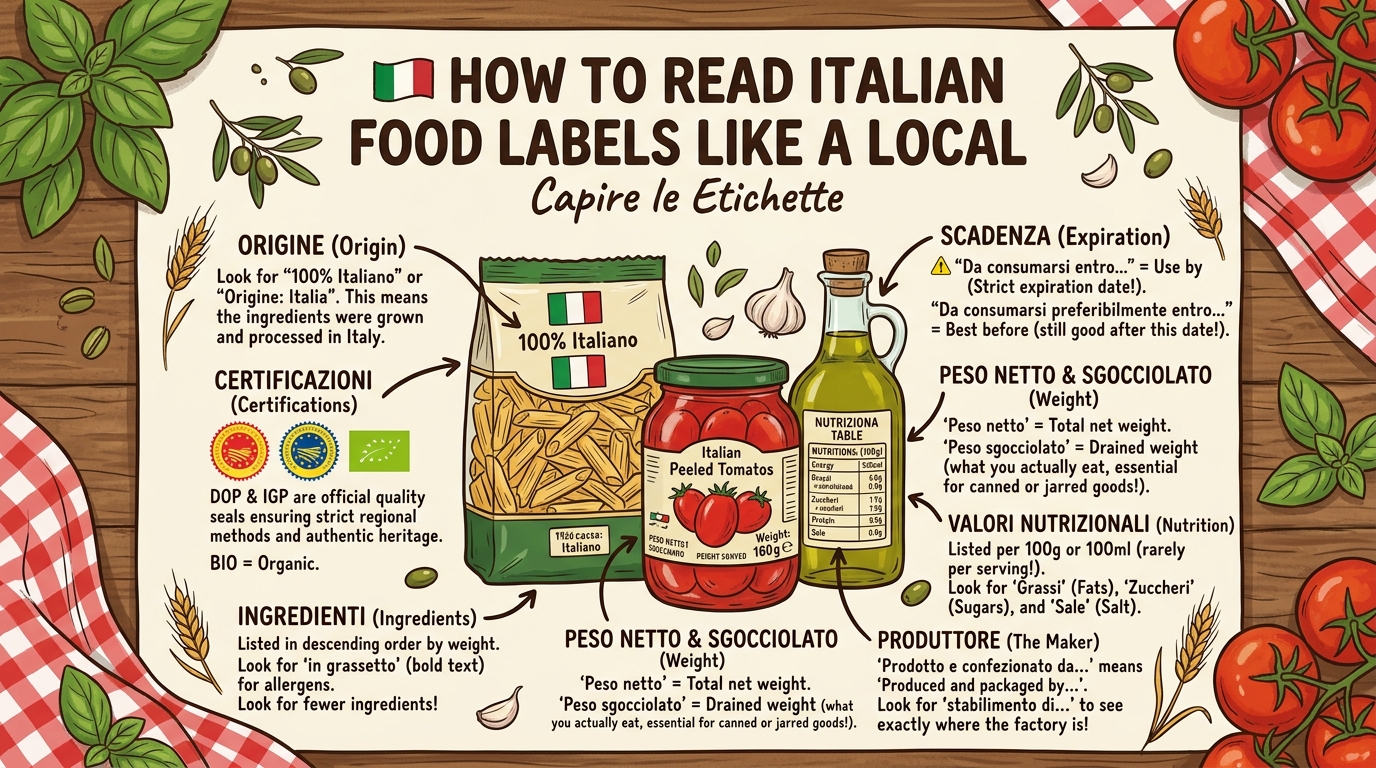
Have you ever found yourself staring at Italian food labels, feeling utterly lost in a sea of unfamiliar words and numbers? Fear not, dear food lover, for I am here to guide you on a journey to decode those mysterious labels like a true local. In Italy, food labels are not just about listing ingredients and nutritional information – they tell a story of tradition, quality, and regional pride. By learning to read Italian food labels like a local, you’ll uncover the secrets behind those delectable products lining the shelves of Italian markets and grocery stores. So, grab a pen and paper, put on your detective hat, and get ready to unlock the delicious world of Italian cuisine one label at a time.
Key Ingredients to Look for
Key ingredients play a crucial role in determining the quality and authenticity of Italian food products. When reading Italian food labels, keep an eye out for certain ingredients that are indicative of traditional and genuine Italian cuisine. For example, olive oil is a staple ingredient in many Italian dishes, so seeing extra virgin olive oil listed as an ingredient is a good sign of authenticity.
Other key ingredients to look for include Parmigiano-Reggiano cheese, San Marzano tomatoes, balsamic vinegar from Modena, and prosciutto di Parma. These ingredients are not only essential for creating classic Italian flavors but also reflect the regional diversity and culinary heritage of Italy. By familiarizing yourself with these key ingredients, you can make more informed choices when selecting Italian food products.
Understanding Nutritional Information
Nutritional Information: When reading food labels, it’s essential to understand the nutritional information provided. This section typically includes details on serving size, calories, macronutrients (such as fat, carbohydrates, and protein), as well as micronutrients like vitamins and minerals. Pay attention to the serving size as it affects the rest of the information provided.
Percent Daily Value (%DV): The %DV on food labels indicates how much a nutrient in a serving of food contributes to a daily diet. This information can help you make informed decisions about your dietary intake. For example, if a food has 20% DV of fiber, it means one serving provides 20% of the recommended daily intake for fiber. Use the %DV to compare products and choose options that align with your nutritional goals.
Decoding Date Labels
Date labels on food products can be confusing, as they come in various forms such as “best by,” “sell by,” and “use by.” It’s essential to understand the differences between these labels to prevent unnecessary food waste. The “best by” date indicates the date until which the product is expected to be at its peak quality, but it is still safe to consume after that date in most cases. The “sell by” date is primarily for retailers, informing them until when the product should be displayed for sale. Consumers can still consume the product after this date if stored properly. The “use by” date is the last date recommended for the use of the product for the best quality and taste.
It’s crucial to use common sense and proper food handling practices when consuming products past their date labels. While these dates provide guidance on quality and freshness, they are not strict indicators of safety. When in doubt, perform sensory checks such as smelling, looking, and tasting the food to determine if it is still suitable for consumption. By understanding date labels, consumers can make informed decisions and reduce food waste in their households.
Organic and GMO Labels
Organic Labels: Organic labels indicate that the product has been produced without synthetic pesticides, fertilizers, or genetically modified organisms (GMOs). Look for certifications such as USDA Organic or EU Organic to ensure that the product meets strict organic standards. Organic foods are grown using sustainable practices that prioritize soil health, biodiversity, and animal welfare.
GMO Labels: Genetically modified organisms (GMOs) are plants or animals whose DNA has been altered in a laboratory. Products containing GMO ingredients are required to be labeled in many countries, allowing consumers to make informed choices. Look for labels such as “Non-GMO Project Verified” to ensure that the product is free from genetically modified ingredients.
Regional Food Label Variations
Regional food label variations refer to the differences in labeling practices based on the geographical location of food production. In Italy, each region takes pride in its unique culinary traditions, which are often reflected in the labeling of food products. For example, certain regions may have specific certifications or designations that highlight the authenticity of local ingredients or traditional preparation methods.
Consumers can use regional food label variations to identify products that are tied to a specific area and are produced using traditional methods. This can help shoppers make informed decisions about the quality and authenticity of the food they are purchasing. By understanding regional variations in food labeling, consumers can also support local producers and promote the preservation of culinary heritage in different parts of Italy.
Tips for Shopping Like a Local
Embrace local markets: When shopping for food in a new place, try to visit local markets where you can find fresh and authentic products. Engaging with local vendors can also provide insights into traditional ingredients and cooking methods.
Ask for recommendations: Don’t hesitate to ask locals for recommendations on what to buy and where to buy it. Locals are often happy to share their favorite spots and products, which can lead to unique culinary experiences and discoveries.