
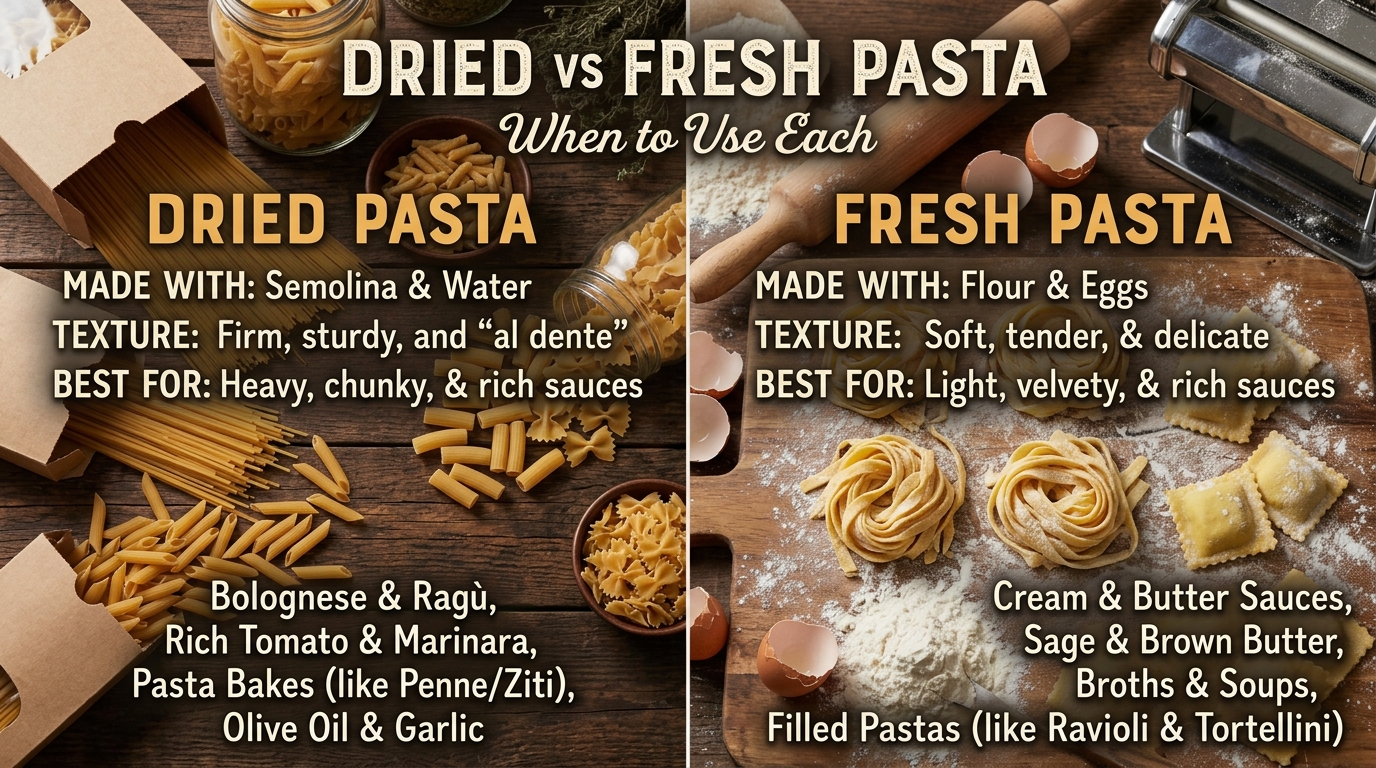
Have you ever wondered why some recipes call for fresh pasta while others recommend dried pasta? The choice between dried and fresh pasta can greatly impact the final dish, from the texture to the flavor. Understanding when to use each type can take your cooking game to the next level. Fresh pasta, with its tender texture and delicate flavor, is perfect for dishes like ravioli or lasagna where the pasta itself shines. On the other hand, dried pasta is ideal for hearty sauces that need a firm base to hold up to the robust flavors. Knowing when to use each type of pasta can make all the difference in creating a truly delicious and well-balanced dish.
What is Dried Pasta?
Dried pasta is a type of pasta that has been dried to remove moisture, making it shelf-stable and convenient for long-term storage. It is typically made from durum wheat semolina flour mixed with water to form a dough, which is then shaped into various forms such as spaghetti, penne, or fusilli. The pasta is then cut into the desired shapes, dried at a low temperature, and packaged for sale.
Dried pasta is a staple in many households due to its versatility, affordability, and long shelf life. It is widely used in a variety of dishes, from classic spaghetti Bolognese to creamy fettuccine Alfredo. Dried pasta is easy to cook, requiring boiling in salted water until al dente, offering a firm yet tender texture that pairs well with a wide range of sauces and toppings.
What is Fresh Pasta?
Fresh pasta is a type of pasta that is made from simple ingredients such as flour and eggs, without the use of drying processes. It is soft, delicate, and has a shorter cooking time compared to dried pasta. Fresh pasta has a rich flavor and a smooth texture, providing a more authentic and luxurious eating experience.
Unlike dried pasta, fresh pasta is typically made in small batches and is often handcrafted. It is commonly found in Italian cuisine and is used in dishes like ravioli, tortellini, and lasagna. Fresh pasta is best enjoyed shortly after it is made, as it tends to spoil faster than dried pasta due to its higher moisture content.
Differences in Flavor and Texture
Dried Pasta: Dried pasta is made from durum wheat semolina and water, which gives it a firm texture when cooked. It has a more robust flavor compared to fresh pasta due to the drying process, which concentrates the wheat flavor. Dried pasta is versatile and holds up well in a variety of sauces and dishes.
Fresh Pasta: Fresh pasta is typically made with eggs and all-purpose flour, giving it a softer texture and richer flavor than dried pasta. It has a delicate and silky feel when cooked, making it ideal for lighter sauces or simply dressed with olive oil and herbs. Fresh pasta has a shorter cooking time compared to dried pasta and is best enjoyed shortly after being made.
Cooking Methods for Dried Pasta
Dried pasta is a pantry staple that can be cooked in various ways to achieve different textures and flavors. The most common method for cooking dried pasta is boiling it in a pot of salted water until it reaches an al dente consistency. Al dente, an Italian term meaning “to the tooth,” refers to pasta that is tender but still slightly firm when bitten into. This cooking method typically takes around 8-12 minutes, depending on the type and thickness of the pasta.
Another popular cooking method for dried pasta is the one-pot pasta technique, where the pasta is cooked directly in the sauce. This method allows the pasta to absorb the flavors of the sauce as it cooks, resulting in a more flavorful dish. Additionally, dried pasta can also be baked in the oven as part of a casserole or baked pasta dish, adding a different dimension to the texture and taste of the final dish.
Cooking Methods for Fresh Pasta
Fresh pasta is a delicate and tender type of pasta that cooks much quicker than dried pasta due to its higher moisture content. When cooking fresh pasta, it is essential to pay attention to the cooking time to avoid overcooking, which can result in a mushy texture. One common method for cooking fresh pasta is to bring a pot of salted water to a boil and then add the pasta. Fresh pasta typically only needs to cook for 1-3 minutes, depending on the thickness of the pasta and the ingredients used.
Another popular way to cook fresh pasta is to sauté it in a pan with butter or olive oil after boiling it briefly. This method can help enhance the flavor of the pasta and create a slightly crispy texture on the outside. Fresh pasta is versatile and can be paired with a variety of sauces, from simple garlic and oil to creamy Alfredo. Experimenting with different cooking methods and sauces can help you discover the perfect way to enjoy fresh pasta at home.
After exploring the differences between dried pasta and fresh pasta, it is evident that both types have their unique characteristics and qualities. Dried pasta is convenient, versatile, and has a longer shelf life, making it a pantry staple in many households. On the other hand, fresh pasta offers a tender texture, delicate flavor, and a luxurious dining experience that is hard to replicate with dried pasta.
Ultimately, the choice between dried and fresh pasta depends on personal preferences, the dish being prepared, and the time available for cooking. Whether you opt for the simplicity and practicality of dried pasta or the artisanal touch of fresh pasta, both varieties have a place in the culinary world and can be enjoyed in a wide range of delicious recipes. Experimenting with different types of pasta can add depth and variety to your meals, allowing you to explore the rich and diverse world of pasta cuisine.