
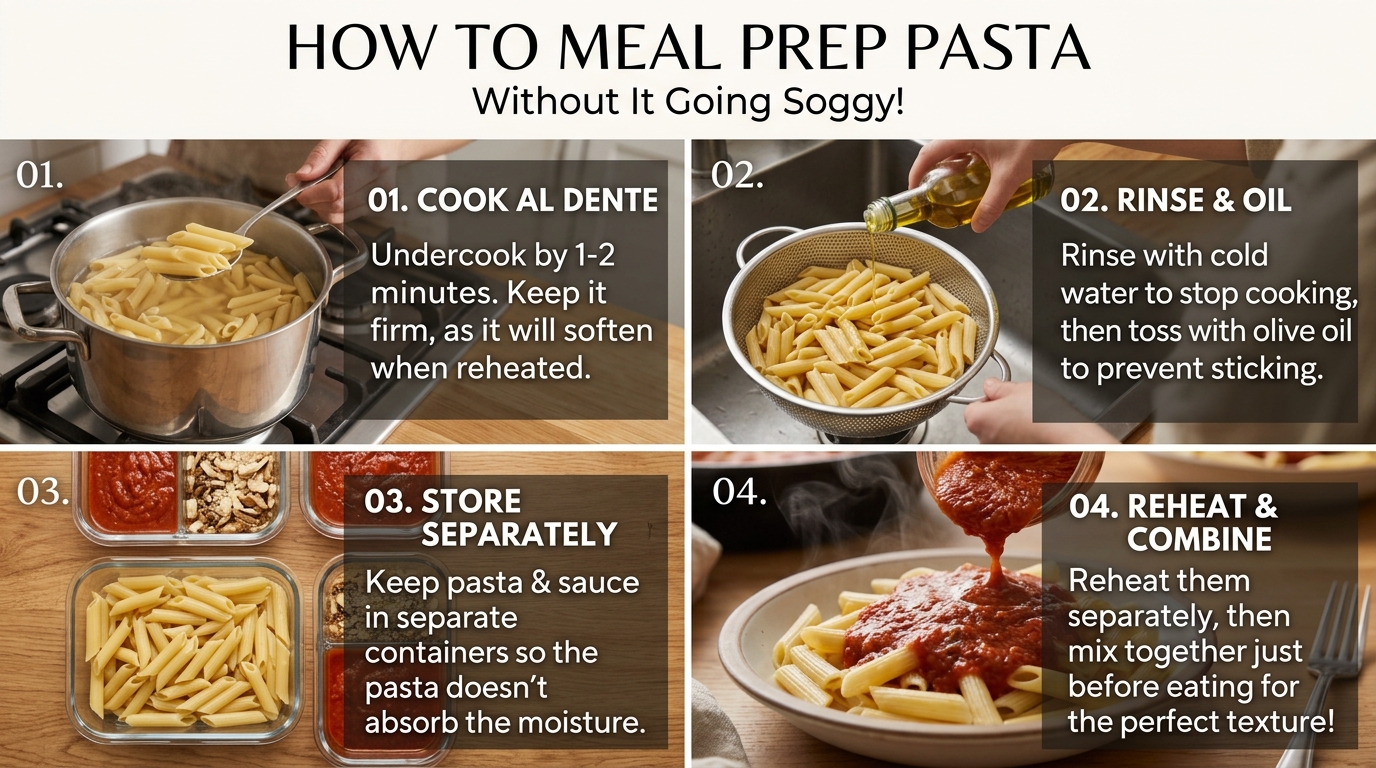
Are you tired of meal prepping your pasta only to find it turns into a soggy mess by the time you’re ready to eat it? Fear not, because I’ve got some tips and tricks to help you meal prep pasta without it going soggy! By following a few simple steps, you can enjoy perfectly cooked pasta even days after you’ve prepared it. Say goodbye to mushy noodles and hello to delicious, al dente pasta every time you meal prep. Let’s dive in and learn how to keep your pasta fresh and tasty throughout the week.
Choosing the Right Pasta
Choosing the right pasta is crucial for achieving the perfect dish. With a wide variety of shapes, sizes, and textures available, it’s important to select the type that complements your sauce and recipe. Long, thin pasta like spaghetti or linguine pairs well with light, oil-based sauces, while short pasta shapes such as penne or fusilli are ideal for capturing chunky sauces and ingredients. For creamy sauces, consider using smoother pasta varieties like fettuccine or tagliatelle.
Additionally, the cooking time can vary depending on the type of pasta chosen. While some types cook quickly, others may require a longer time to reach the desired al dente consistency. Understanding the characteristics of different pasta shapes will help you make informed decisions when selecting the right pasta for your dish.
Cooking Pasta Al Dente
Pasta al dente is a crucial cooking technique that ensures the pasta is cooked to a firm but tender texture, with a slight bite remaining. To achieve this, follow the instructions on the pasta package for cooking time, but begin testing for doneness a few minutes before the suggested time. Use a timer to avoid overcooking the pasta, as it can quickly go from al dente to mushy.
To test for al dente: Fish out a single strand of pasta using tongs or a fork and take a bite. The pasta should be cooked through but still have a slight resistance when bitten into. Once the pasta reaches this stage, promptly drain it in a colander and rinse with cold water to stop the cooking process. Remember that pasta continues to cook in its residual heat, so timing is key to achieving the perfect al dente texture.
Tips for Meal Prepping Pasta
Tip 1: Choose the Right Pasta: When meal prepping pasta, opt for sturdy pasta shapes like penne, fusilli, or farfalle that hold up well when reheated. These shapes are less likely to become mushy compared to delicate pasta types like angel hair or spaghetti.
Tip 2: Cook Pasta Al Dente: To prevent overcooked pasta after reheating, always cook your pasta al dente. This means cooking it until it is firm to the bite but not hard. The pasta will continue to cook slightly when reheated, so starting with al dente pasta ensures the perfect texture in the end.
Tip 3: Portion Control: When meal prepping pasta, consider portioning out individual servings in containers or bags. This not only makes it easier to grab a meal on the go but also helps prevent overeating. Additionally, portioning out servings can help streamline your meal prep process and ensure you have balanced meals ready to go.
Recipe Ideas for Meal Prepped Pasta
Vegetarian Pasta Primavera: This colorful and flavorful dish is perfect for meal prepping. Combine cooked pasta with a variety of fresh vegetables such as bell peppers, cherry tomatoes, zucchini, and broccoli. Toss everything in a light olive oil and herb dressing for a refreshing meal that can be enjoyed hot or cold.
Chicken Alfredo Pasta: For a creamy and indulgent option, consider preparing chicken alfredo pasta. Cooked pasta is mixed with grilled chicken pieces and a rich alfredo sauce. Sprinkle with grated parmesan cheese and chopped parsley before dividing into individual meal prep containers for a satisfying lunch or dinner option.
Storing and Reheating Pasta
Storing: Properly storing cooked pasta is essential to maintain its quality and flavor. Once the pasta has been cooked, allow it to cool completely at room temperature before storing. Store the pasta in an airtight container in the refrigerator for up to 3-5 days. To prevent the pasta from sticking together, you can toss it with a little olive oil before refrigerating.
Reheating: When reheating pasta, there are a few methods you can use. One common method is to reheat pasta in a pot on the stovetop with a splash of water or sauce to prevent it from drying out. Alternatively, you can microwave the pasta, making sure to cover it to retain moisture. Remember to stir the pasta halfway through the reheating process to ensure even heating. Whichever method you choose, be cautious not to overheat the pasta, as it can become mushy.
In conclusion, mastering the art of cooking pasta can greatly enhance your culinary skills and meal prepping efficiency. By choosing the right pasta shape, cooking it al dente, and incorporating various recipes and meal prep techniques, you can create delicious and convenient pasta dishes that suit your taste preferences and lifestyle. Remember to store and reheat pasta properly to maintain its quality and flavor. With practice and experimentation, you can elevate your pasta dishes to new heights and impress yourself and others with your cooking prowess. Embrace the versatility and simplicity of pasta, and enjoy the satisfaction of preparing satisfying meals that nourish both body and soul.