
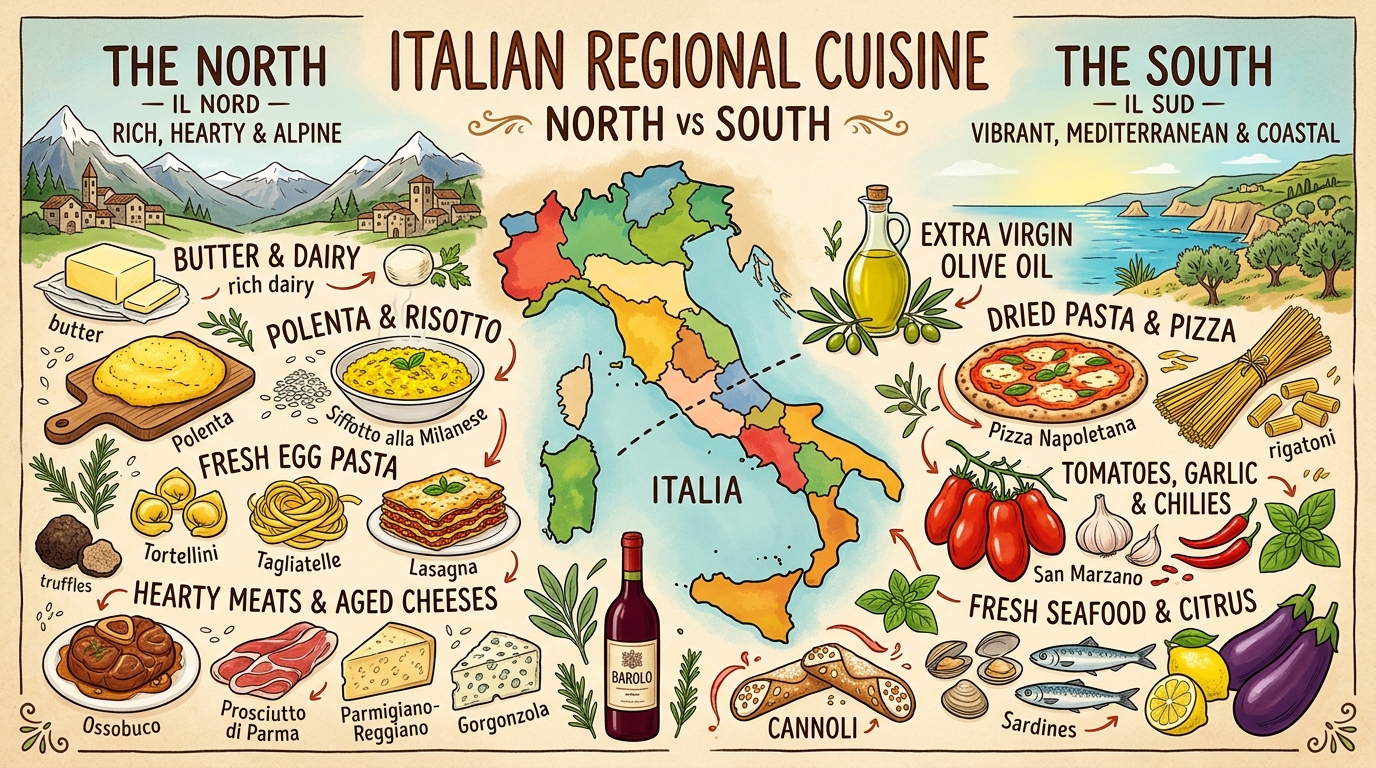
Are you ready to embark on a culinary journey through Italy’s diverse flavors? Join us as we explore the tantalizing world of Italian regional cuisine, with a focus on the distinct differences between the North and the South. From the hearty, rich dishes of the North to the fresh, vibrant flavors of the South, each region offers a unique and delicious taste of Italy. Let’s delve into the culinary traditions, ingredients, and influences that shape the gastronomic landscape of this beloved Mediterranean country. Get ready to uncover the secrets behind Italy’s mouthwatering dishes and discover the soul of Italian cuisine.
History of Italian Cuisine
Italian cuisine has a rich and diverse history that dates back to ancient times. Influenced by various cultures and regions, Italian food has evolved into the beloved cuisine we know today. One of the earliest known cookbooks, “De Re Coquinaria” by Apicius, provides insights into the culinary practices of ancient Rome, which laid the foundation for many Italian dishes.
During the Middle Ages, Italian cuisine continued to develop, with the introduction of new ingredients such as pasta, tomatoes, and potatoes following the Columbian Exchange. The Renaissance period marked a time of refinement in Italian cooking, as culinary arts became more sophisticated and regional specialties began to emerge. Italian cuisine gained international recognition in the late 19th and early 20th centuries, solidifying its reputation as one of the world’s most beloved culinary traditions.
Northern Italian Cuisine
Northern Italian cuisine is characterized by its use of butter, cream, and rice, as opposed to the olive oil, tomatoes, and pasta more commonly associated with Southern Italian cuisine. The region’s proximity to other European countries like France, Austria, and Switzerland has influenced its culinary traditions, resulting in dishes that are often richer, creamier, and more varied in flavors.
Some iconic dishes from Northern Italy include risotto, polenta, osso buco, and various types of cured meats and cheeses. Seafood also plays a significant role in the cuisine of regions like Liguria and Veneto, where fresh fish and shellfish are abundant. Overall, Northern Italian cuisine is known for its emphasis on quality ingredients, attention to detail, and a strong tradition of hearty, yet refined dishes that showcase the region’s diverse culinary heritage.
Southern Italian Cuisine
Southern Italian cuisine is known for its bold flavors, fresh ingredients, and rich culinary traditions. This region, encompassing areas such as Sicily, Calabria, and Puglia, has a strong influence from Mediterranean cuisine, with an emphasis on seafood, olive oil, and fresh vegetables. One of the defining characteristics of Southern Italian cuisine is the use of simple yet high-quality ingredients to create dishes bursting with flavor.
Popular dishes from Southern Italy include pasta alla Norma, made with eggplant, tomatoes, and ricotta salata; arancini, deep-fried rice balls stuffed with cheese and ragu; and sfogliatelle, a flaky pastry filled with sweet ricotta. Southern Italian cuisine is also known for its use of bold spices and herbs, such as oregano, basil, and chili peppers, adding depth and complexity to dishes. Overall, Southern Italian cuisine offers a vibrant and diverse culinary experience that reflects the region’s history, geography, and cultural influences.
Contrasts in Ingredients
Regional differences in ingredients play a significant role in shaping the diverse flavors of Italian cuisine. In Northern Italy, ingredients such as butter, rice, and polenta are commonly used due to the influence of neighboring countries like France and Switzerland. On the other hand, Southern Italian cuisine is characterized by the abundant use of olive oil, tomatoes, and fresh herbs, reflecting the region’s Mediterranean climate and proximity to North Africa.
Seafood versus meat-centric dishes are another key point of contrast in Italian cuisine. Coastal regions like Sicily and Naples are known for their seafood-based dishes, incorporating fresh catches like swordfish, anchovies, and squid. In contrast, inland regions such as Tuscany and Umbria focus more on meat-centric dishes like wild boar, beef, and lamb, reflecting the availability of livestock and hunting traditions in those areas.
Culinary Influences
Culinary influences have played a significant role in shaping Italian cuisine throughout history. Italy’s geographical location at the crossroads of Europe, Asia, and Africa has exposed it to a wide range of cultural exchanges and trade routes, resulting in a diverse culinary landscape.
Over the centuries, various invaders, traders, and immigrants have left their mark on Italian cuisine. The Greeks introduced olives and olive oil, the Arabs brought spices like saffron and sugar, and the Spanish contributed tomatoes and peppers. Each wave of influence added new flavors, techniques, and ingredients to Italian cooking, creating the rich and varied cuisine we know today.
The conclusion of Italian cuisine brings together a rich tapestry of flavors, techniques, and traditions that have evolved over centuries. From the hearty dishes of the north to the light and fresh flavors of the south, Italian cuisine offers a diverse range of culinary experiences that cater to all tastes. The use of fresh, high-quality ingredients, simple yet flavorful seasonings, and a strong emphasis on family and tradition are key aspects that define Italian cooking.
As we conclude our exploration of Italian cuisine, we are left with a deep appreciation for the passion and dedication that Italians bring to their food. Whether enjoying a classic pasta dish, a rustic meat stew, or a delicate seafood risotto, Italian cuisine never fails to delight the senses and bring people together around the table. The legacy of Italian cuisine continues to inspire chefs and food enthusiasts around the world, ensuring that its influence will endure for generations to come.