
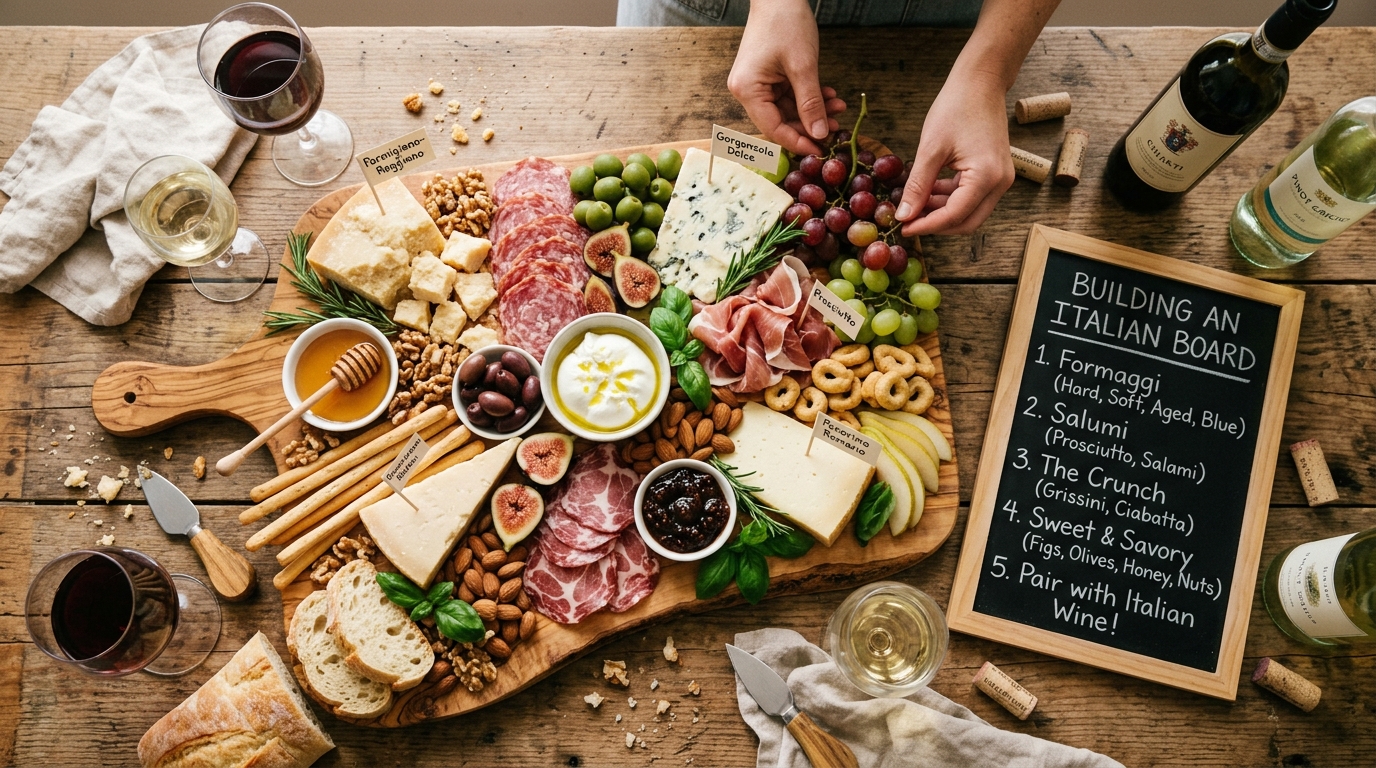
Imagine creating a culinary masterpiece that transports you to the rolling hills of Tuscany with just one bite. Say hello to the Italian Cheese and Wine Board – a delightful spread that brings together the finest flavors of Italy in one stunning presentation. Picture this: a rustic wooden board adorned with a carefully curated selection of artisanal cheeses, savory charcuterie, fresh fruits, crunchy nuts, and of course, exquisite Italian wines to elevate the experience. Whether you’re hosting a soirée with friends or simply treating yourself to a solo indulgence, mastering the art of building an Italian Cheese and Wine Board is sure to impress and delight your taste buds. Let’s dive in and discover the secrets to creating a culinary masterpiece that will leave you craving more.
Selecting Cheeses
Choosing the right cheeses is crucial when creating a cheese board that will delight your guests’ taste buds. Consider selecting a variety of cheeses with different textures, flavors, and milk types to provide a well-rounded tasting experience. Include a mix of soft, semi-soft, hard, and blue cheeses to cater to different preferences. Soft cheeses like brie or camembert offer a creamy and mild taste, while hard cheeses like aged cheddar or gouda provide a sharper flavor. Additionally, incorporating a unique or local cheese can add a special touch to your cheese board.
When selecting cheeses, think about pairing options with wines and accompaniments to create harmonious flavor combinations. Ask your cheesemonger for recommendations based on your preferences and the overall theme of your cheese board. Remember to let the cheeses come to room temperature before serving to enhance their flavors and aromas. Including a variety of colors, shapes, and sizes of cheese on your board not only makes it visually appealing but also adds interest to the tasting experience. Ultimately, selecting a well-balanced assortment of cheeses will elevate your cheese board and impress your guests.
Choosing Wines
Pairing wines with cheeses is a delightful art that can enhance the flavors of both components when done right. When selecting wines to accompany your cheese board, consider the intensity of the cheese. Lighter, fresher cheeses like goat cheese pair well with crisp whites such as Sauvignon Blanc or sparkling wines like Prosecco. For medium cheeses like Gruyere or cheddar, opt for medium-bodied reds like Merlot or Pinot Noir. Strong, aged cheeses like blue cheese or aged gouda can stand up to bold reds such as Cabernet Sauvignon or Malbec.
Don’t forget about balance when choosing wines for your cheese board. Aim for a variety of flavors and textures to create a well-rounded tasting experience. It’s also helpful to consider regional pairings – pairing wines and cheeses from the same region can often result in harmonious combinations due to shared terroir and traditional pairings. Ultimately, the key is to experiment and find combinations that you enjoy, as personal preference plays a significant role in creating the perfect wine and cheese pairing.
Adding Accompaniments
Accompaniments are essential components of a well-rounded cheese board. They complement the flavors and textures of the cheeses, enhancing the overall tasting experience. When selecting accompaniments, consider a variety of options to provide a balance of flavors, colors, and textures. Some popular choices include:
- Fresh Fruits: Grapes, figs, apples, and pears add sweetness and freshness to the board.
- Nuts: Almonds, walnuts, and pecans offer a crunchy contrast to the creamy cheeses.
- Crackers and Bread: Choose a selection of plain and flavored crackers, as well as crusty bread slices for a textural contrast.
- Olives and Pickles: Briny olives and tangy pickles provide a savory element to balance the richness of the cheeses.
- Spreads and Honey: Fig jam, honey, and mustard add depth of flavor and complexity to each cheese bite.
Experiment with different combinations of accompaniments to find the perfect pairing for your cheese selections. Be sure to consider the overall presentation of the board, arranging the accompaniments in an aesthetically pleasing and accessible manner for your guests.
Assembling the Board
Arranging the Cheeses: When assembling a cheese board, it’s essential to arrange the cheeses in a visually appealing and practical way. Start by placing the cheeses on the board, making sure to provide enough space between each variety. Consider placing the cheeses in different shapes or forms to create an interesting layout. Additionally, label each cheese to help guests identify them easily.
Adding Accompaniments: To complement the cheeses, include a variety of accompaniments such as crackers, bread, fruits, nuts, and spreads. Arrange these accompaniments around the cheeses, filling in any empty spaces on the board. Consider the flavors and textures of the cheeses when selecting accompaniments to ensure a harmonious pairing. Remember to provide small knives or spreading utensils for guests to serve themselves.
Serving Tips
Temperature: Serve cheeses at room temperature to enhance their flavors. Take them out of the refrigerator at least 30 minutes before serving. Soft cheeses like brie and camembert are best enjoyed when they are extra creamy and spreadable.
Pairings: Consider the flavors and textures of both the cheeses and accompaniments when serving. For instance, pair a sharp cheddar with a sweet fig jam or honey for a delightful contrast. Don’t forget to offer a variety of crackers, bread, and fruits to complement the cheeses.
The art of creating a stunning cheese board is both enjoyable and rewarding. By carefully selecting a variety of cheeses, wines, and accompaniments, you can create a visually appealing and delicious spread that will impress your guests. Remember to consider a mix of flavors, textures, and colors to provide a well-rounded tasting experience for everyone.
As you assemble and serve your cheese board, don’t forget to add your personal touch and creativity. Whether it’s arranging the items in an aesthetically pleasing manner or sharing interesting facts about the cheese and wine selections, your attention to detail will elevate the overall experience. Lastly, enjoy the process of tasting and exploring the different combinations of flavors, and don’t be afraid to experiment with new pairings to create a unique and memorable culinary experience for all.